Every time the FIFA World Cup comes around, I find myself captivated not only by the matches but by the magical moment at the end when the winning captain lifts the trophy. It is a moment that millions dream of witnessing live, and countless young players imagine living themselves someday.
And a question that fascinates me is the trophy itself. I am sure if you are a soccer fan like me, you may also have found yourself wondering about the history, material, and cost of this trophy. The FIFA World Cup trophy holds an interesting story itself.
It has not always looked the way it does today. It has evolved through eras of football, survived thefts, traveled continents, and represented victories that define nations. This legacy helps us appreciate why the trophy is more than a shiny object. It represents memories, tradition, and decades of triumph.
So now, I am going to unfold the entire story behind this iconic trophy. I will share not only the history of the FIFA World Cup trophy but also its detailed design, the surprising materials inside it, and what it is actually worth. By the end, you will see this trophy in a completely new way.
FIFA World Cup Trophy’s Replica – A Fact Many Fans Don’t Know
Let me share something that surprises a lot of people and clear up one of the biggest misunderstandings among fans
When you watch the World Cup final and see the winning captain lift that sparkling gold trophy, most fans assume the team gets to take that exact piece home. But that is not what actually happens.
The moment the final ceremony ends, FIFA quietly takes back the original trophy and secures it again. The players celebrate with it for only a few minutes before it’s returned to FIFA officials. What the champions take home is a replica, and even though it looks identical, it is not made of 18-carat solid gold like the original.
The replica is crafted using gold-plated bronze, which makes it far less valuable in terms of raw material but still priceless in terms of prestige. This replica becomes the permanent property of the winning nation, and it is usually displayed at their football association’s headquarters or national museum.
It is engraved only with that country’s name, while the original trophy carries the entire history of winners since 1974. So, when you see players celebrating months after the tournament with the trophy, they are actually posing with their replica.
The real one stays under FIFA’s strict protection and only appears on the world stage once every four years. This is a detail many fans don’t know, and it adds a fascinating layer of mystery to the history of football’s most iconic prize.
The Era of the Jules Rimet Trophy
The first trophy ever awarded at a FIFA World Cup appeared in 1930. It was originally called Victory and was designed by French sculptor Abel Lafleur. The trophy portrayed a classical figure symbolizing triumph.
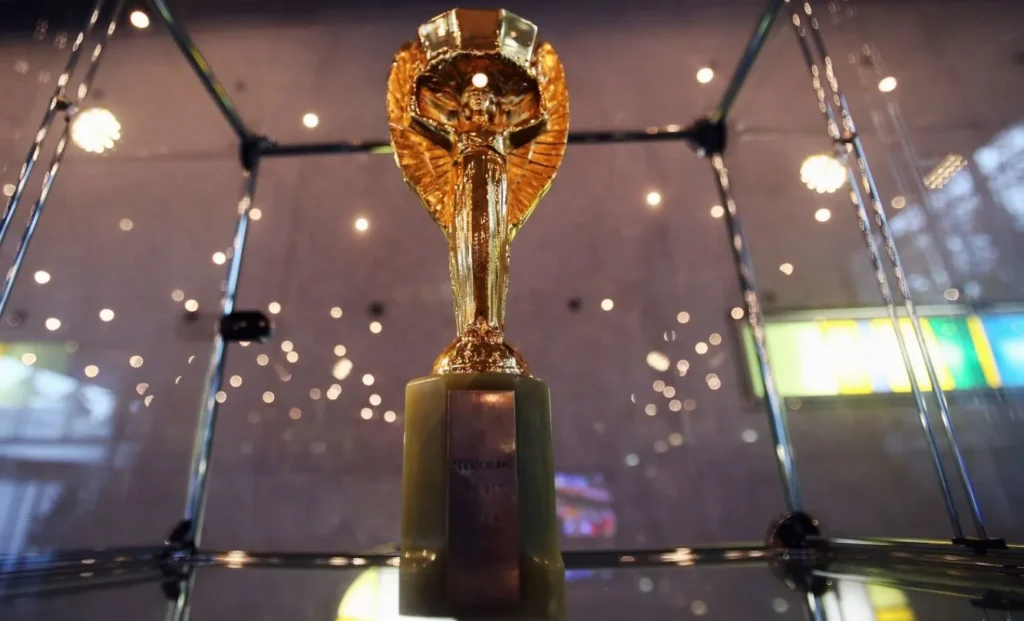
In 1946, it was renamed the Jules Rimet Trophy to honor the FIFA president who helped create the World Cup. This trophy saw the rise of Uruguay, Italy, and Brazil and remained the symbol of victory until 1970.
Its elegant design reflected the early spirit of the sport and became one of football’s earliest global icons.
How Brazil Earned Permanent Ownership of the Original Trophy?
The rules in place during the early decades were very straightforward. Any team that won the World Cup 3 times would be allowed to keep the trophy permanently. Brazil achieved this incredible milestone in 1970 after winning titles in 1958 and 1962.
Their third victory in Mexico City meant they became the permanent custodians of the Jules Rimet Trophy. That moment did not just mark a football triumph. It marked the end of the first trophy’s era and forced FIFA to design a brand new symbol for future champions.
The Sad Fate of the Jules Rimet Trophy
This part of the story still feels heartbreaking to me. The Jules Rimet Trophy was stolen in 1966 while on display in England, but was miraculously recovered by a dog named Pickles.
Unfortunately, in 1983, long after Brazil became its rightful owner, the trophy was stolen again from the Brazilian Football Confederation headquarters. This time, it was never found.
Many believe it was melted due to its precious metal content. That loss forever shaped how FIFA designed, protected, and preserved future trophies.
The Birth of the Modern FIFA World Cup Trophy
When the original trophy was awarded to Brazil in 1970, FIFA launched a worldwide competition to design a new prize. The organization needed a symbol that felt global, modern, and emotionally powerful.
The new trophy had to represent the unity of football and the energy of competition. What emerged from that search became one of the most recognizable designs in sports history.
The Creative Vision of Silvio Gazzaniga
Italian sculptor Silvio Gazzaniga won the competition with a design that still leaves me impressed today. He imagined two human figures rising upward and holding the Earth above them. This design represents athletic achievement, teamwork, and the universal spirit of football.
Whenever I see the trophy lifted, I am reminded of how beautifully Gazzaniga captured the essence of victory. His vision connected artistry with emotion in a way few sports trophies ever have.
Why the Modern Trophy Stands Out?
The new trophy introduced in 1974 stands apart because it feels alive. Its upward movement, sculpted details, and vibrant malachite base make it visually dynamic. Compared to the earlier trophy, it carries more energy and depth.
It is not simply a polished object. It is a flowing sculpture filled with meaning. Its golden glow reflects the joy of victory, while the green base adds contrast and character. To this day, no trophy captures global imagination quite like this one.
The Design and Material of the Original FIFA World Cup Trophy
Now I want to dig into the part that fascinates many fans. What exactly is this trophy made of, and how does it achieve that dramatic look?
The creation process blends precision with artistry. Every detail, from the gold layers to the stone base, is designed with purpose. Understanding the materials gives you a deeper appreciation for why the trophy feels so special on screen and even more so in person.
The Precious Gold Structure
The trophy is made of 18-carat gold. Many people assume it is solid, but it actually has a hollow interior to make it easier to lift. The gold layers are thick enough to maintain strength and shine, but not so heavy that players struggle to raise it.
This balance allows it to remain both luxurious and functional. That golden brilliance you see under stadium lights comes directly from the purity of the metal.
The Meaning Behind the Malachite Base
The green base is crafted from malachite, a naturally patterned stone known for its rich, deep color. I always think the malachite gives the trophy a unique personality. Its patterns make every trophy slightly different in appearance.
The choice of malachite symbolizes transformation and growth, which aligns well with the values of sport and international unity. The green also contrasts beautifully against the gold, giving the design greater depth.
Dimensions and Weight
The trophy stands about 36.8 centimeters tall and weighs around 6.175 kilograms. When you see a captain lift it, the size looks perfect. It commands attention without feeling oversized.
Its weight is enough to feel substantial but not enough to become cumbersome. When you imagine everything it symbolizes, it almost feels heavier than it is.
The Engraving Tradition
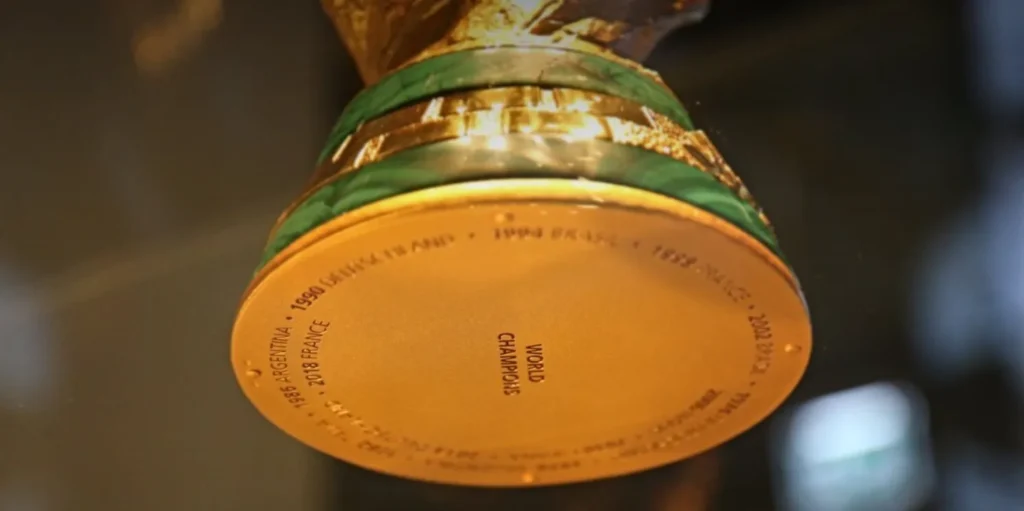
After every World Cup final, the name of the winning nation is engraved on the trophy’s base. I find this tradition especially meaningful because it turns the trophy into a living historical record.
As more names are added, the legacy grows. There is something beautiful about knowing each winner becomes permanently embedded in the trophy’s story.
The Real Worth of the Original FIFA World Cup Trophy
Now, let us get to the part many people find surprising. What is the FIFA World Cup trophy actually worth? The answer depends on how you look at it. There is the raw material value. There is artistic and historic value. And then there is the insured value. Together, these layers create a fascinating financial story.
1. The Material Value
The gold content alone gives the trophy a raw value that often exceeds $250,000, depending on global gold prices. Since it is made of 18-carat gold, its financial base is significant even without considering anything else.
2. The Artistic Value
This trophy is not something you can recreate with money. Its design, symbolism, and history make it priceless from an artistic point of view. No other trophy carries this level of global recognition. When I think about artistic value, I see it as a masterpiece rather than an object for sale.
3. The Insured Value
FIFA insures the trophy for an amount that reaches well into the millions. It reflects its cultural and symbolic importance. Even if someone tried to buy it, no price tag would make sense. Its worth is tied to football history, which makes it irreplaceable.
The FIFA World Cup Trophy Tour and Award Ceremony
Before the final match, the FIFA World Cup trophy travels around the world as part of a global tour. Fans from different regions get the chance to see it up close. The tour builds excitement and reminds everyone that the World Cup is a global celebration.
Which Trophy Goes on the FIFA World Cup Trophy Tour?
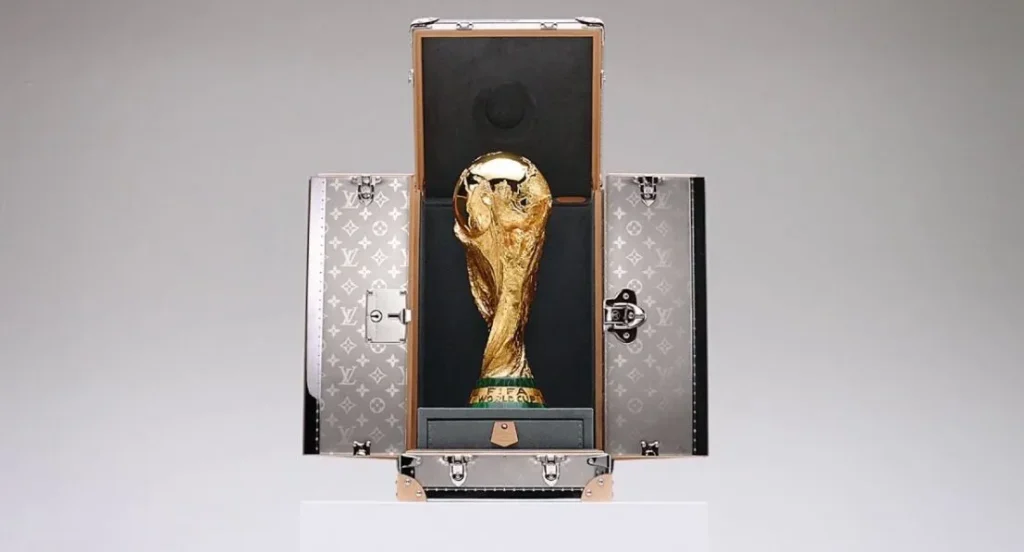
The trophy you see traveling from country to country before every World Cup is not the original. FIFA always sends a high quality, gold plated replica for the Trophy Tour. This replica is specially made for public events, sponsor showcases, and promotional appearances.
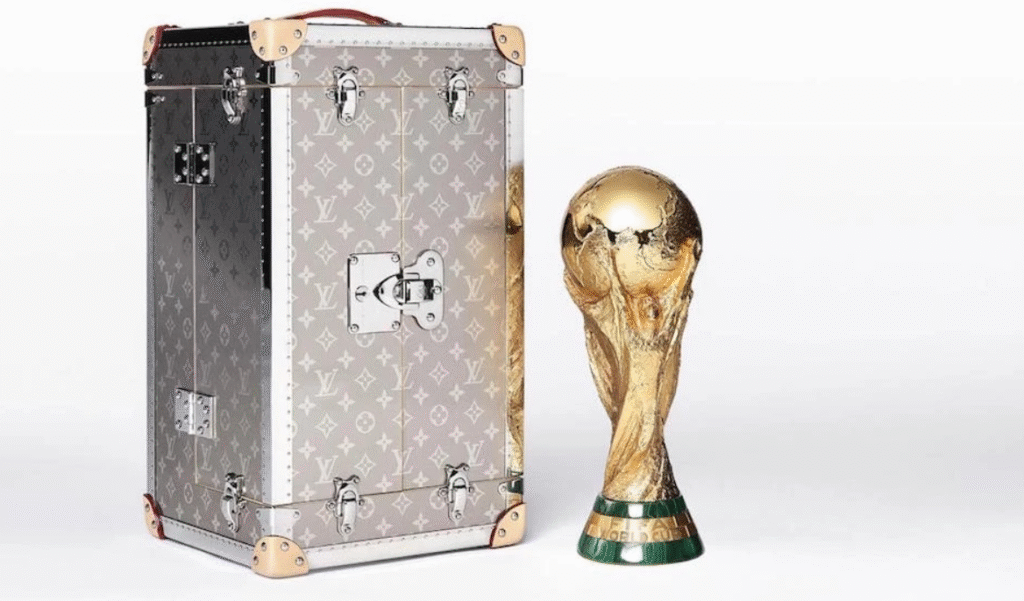
The original trophy is far too valuable and historically important to travel the world. It stays fully secured under FIFA’s control and is only taken out during the World Cup final day for the awarding ceremony. Even then, access is strictly controlled.
What Happens on the Final Day?
On the day of the final, the original FIFA World Cup trophy is displayed near the field where millions can see it. Once the match ends, the winning nation’s name is engraved. Then the captain lifts the trophy during one of the most emotional moments in sports. That moment becomes an instant piece of history.
After that, the original is immediately taken back by FIFA, and the champions are given a replica trophy, which they get to keep permanently.
Who Actually Keeps the Original FIFA World Cup Trophy?
A common question I receive from fans is who gets to keep the original trophy. Since 1974, FIFA has kept the original in its own possession at all times. This decision came from the unfortunate fate of the Jules Rimet Trophy.
The modern trophy is too valuable to risk losing or damaging, so FIFA stores it securely and brings it out only during official events.
What Winners Receive Instead?
The winning team receives a high quality replica. These replicas look identical to the original and are crafted with the same level of artistry. The replica becomes a national treasure for the winning country and is usually showcased in a federation museum.
Even though teams do not keep the original, the replica they receive carries equal pride and emotional value.
How the FIFA World Cup Trophy Replica Is Made?
Many fans believe the replica trophy given to the World Cup winning team is an exact copy of the original in every possible way. I used to think the same until I looked deeper into the process.
The truth is that the replica is made very differently from the original trophy, and once you understand how it is crafted, you can see why FIFA keeps the real one protected at all times.
Why the Replica Is Not Solid Gold?
The original FIFA World Cup Trophy is made from solid 18 carat gold. That alone makes it extremely valuable as a physical object, even before you consider the history behind it. The replica, however, uses a gold plated brass base. The decision to use brass allows the trophy to maintain the same shape and shine without the massive cost or weight of solid gold.
Multiple layers of gold plating are applied to create the rich finish that fans recognize instantly. When you see the replica on television or displayed during a trophy tour, it looks almost identical to the original because of this careful plating process.
Creating the Shape Through Precision Molding
The next part of the process involves creating the mold. The mold for the replica is formed using exact measurements taken from the original trophy. It ensures that every curve, every angle, and every detail is faithfully reproduced.
Once the mold is ready, artisans cast the main structure of the trophy. After casting, the surface is cleaned, polished, and prepared for hand finishing. These steps play a major role in giving the replica its premium look.
Hand Finishing for Authentic Detail
Even though modern machinery is used in parts of the process, skilled craftsmanship is still essential. Artisans carefully polish and refine the surface to make sure the replica has the same visual character as the original trophy. The feel of the trophy, especially when held by the winning captain, needs to carry a sense of prestige and weight.
The team responsible for the finishing touches pays close attention to every detail so the replica does not look like a mass produced item. Instead, it carries the aura of a championship trophy.
Why Past Winner Names Are Not Engraved on Replicas?
Many fans do not realize that the names of past champions are engraved only on the base of the original trophy. The replica does not include these engravings. It is intentional and helps distinguish the original from the versions that teams take home.
The engravings on the original trophy are updated after every final. This tradition is part of the trophy’s history, and FIFA keeps that element exclusive to the authentic piece.
FIFA Verification Before Use
Before the replica can travel on tour or be handed to the champions, it must pass through a verification process. FIFA officials inspect the quality of the finish, the accuracy of the design, and the overall presentation. Only after this approval does the replica become the trophy that travels the world and eventually ends up in the hands of the winning team.
Let’s Rewind
Whenever I think about the FIFA World Cup trophy, I do not see it as just a piece of metal. I see a global symbol that captures decades of joy, heartbreak, achievement, and unity. From the early days of the Jules Rimet Trophy to the modern golden masterpiece we see today, this trophy has carried the dreams of billions.
It represents the beauty of the sport and the stories of the champions who earned the right to lift it. No matter how much the world changes, this trophy will continue inspiring new generations and reminding us why football remains the world’s favorite game.
About the Author